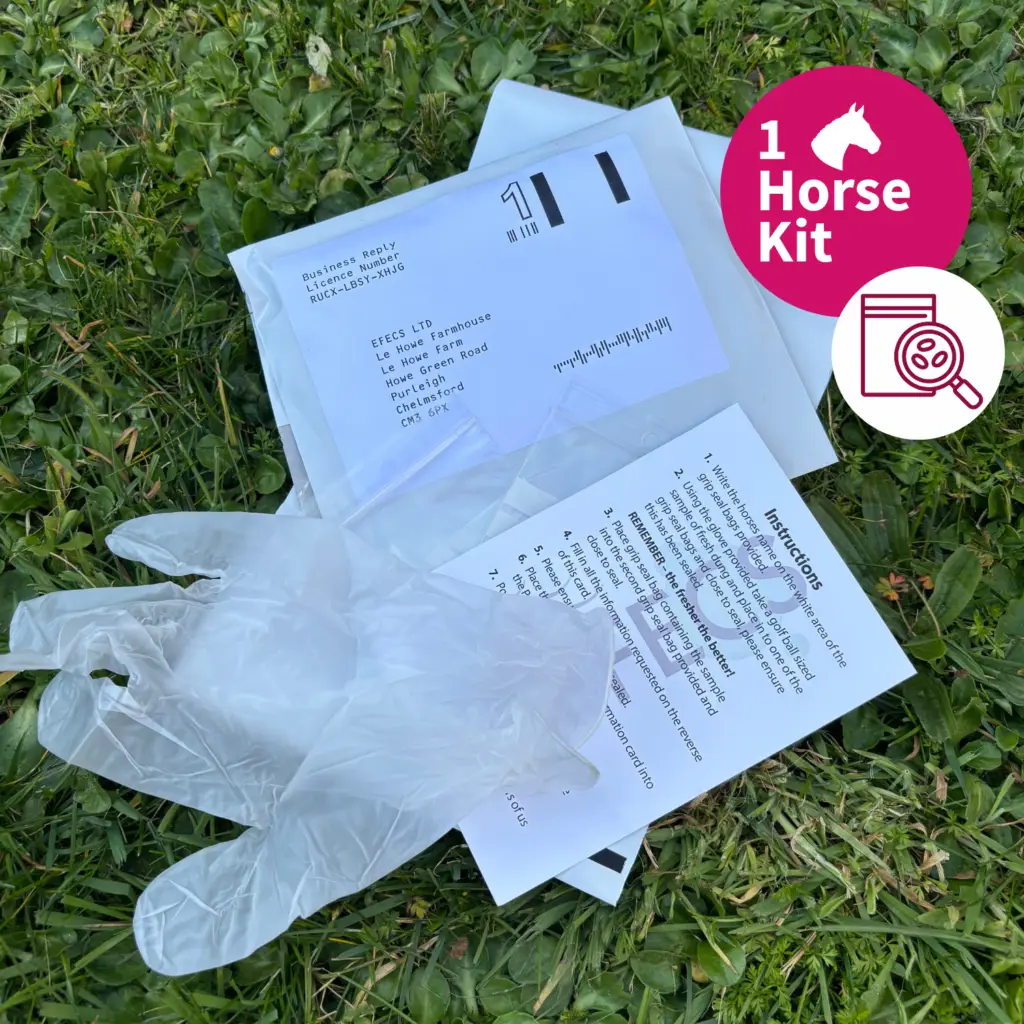
You love your horse. You look after their feet, their teeth, their saddle fit, their feed… but what about what’s happening inside?
A faecal egg count (or FEC) is a simple lab test that checks your horse’s poo for worm eggs. Sounds grim? Maybe. But it’s one of the most important tools you have for protecting your horse’s health.
So, what exactly is a faecal egg count?
It’s not just a guess or a glance. We take a small sample of your horse’s droppings, mix it with a special solution, and examine it under a microscope. From there, we count the number of worm eggs per gram (EPG) of poo.
The result gives you a clear picture of how much of a worm burden your horse is carrying — or whether they need worming at all.
Why does this matter?
In the past, we all followed routine worming schedules: worm every 6–13 weeks, rotate products, job done. But now we know better.
Routine worming without testing leads to resistance.
That means the worms get smarter, and the wormers stop working. Once that happens, we’re out of options — and that’s really bad news for horses.
Testing first means:
- You only worm when your horse actually needs it
- You’re not chucking chemicals in for no reason
- You help slow down wormer resistance
- You save money by not over-worming
What can worms actually do?
Left unchecked, worms can cause weight loss, colic, diarrhoea, poor condition, and in severe cases, death. And the worst bit? You can’t always see it coming.
That’s why testing matters — it catches issues before they become emergencies.
Bottom line?
Faecal egg counts are simple, quick, affordable and essential.
They’re not just for “problem” horses — they’re for every horse.
👉 Ready to test? Order your kit today
👉 Want reminders + regular testing? Join the subscription