

What should you do about worming pregnant mares or a mare + foal? Worming mares + foals is important but also needs to be done carefully.
This post will help you discover what you need to do for your mare + foal.
Should you worm as normal or not?
I get asked this question a lot, so let me help you to make sure your mare + foal are not harmed by worms or wormers!
The quick answer is:
Pregnant + lactating mares need different treatment because there is a greater risk of infection.
There is also a risk of passing that infection onto the foal.
So, it is vital to check to make sure any product you use is suitable + licensed for mares in foal.
So what should you do?
While in foal:
During the period the mare is in foal, do regular worm counts every 8 – 10 weeks.
Test for tapeworm with an Equisal tapeworm test every six months.
The mare should be treated for the inhibited encysted small redworm over the winter months also. Moxidectin is safe to use.
When Ready to foal:
3 – 4 weeks from her ‘due day’ worm the mare using an Ivermectin based wormer.
This will help prevent Threadworm (Strongyloides Westeri) being passed onto the foal from the mare’s milk.
We want to prevent Threadworm because it causes chronic diarrhoea.
The parasite can also penetrate the horse’s skin + remain in the body tissue for some years.
It is worth noting, that healthy foals normally develop natural immunity at around six months of age.

After foaling:
A lactating mare should not be wormed for the first two weeks after giving birth.
If you suspect that your mare requires worming for any reason during this period, it MUST be under the guidance of your vet.
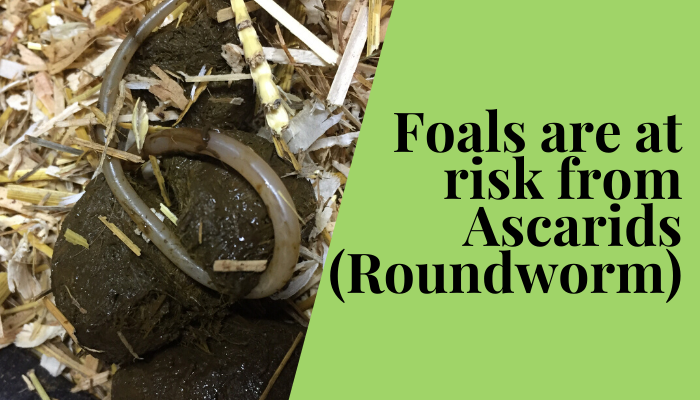
Foals are at huge risk from Ascarids (Roundworm) which can grow + reproduce at a rapid rate in an untreated foal.
Roundworm are a large, creamy white worm. They grow up to 40cms in length, so they can present serious health risks to young foals.
The clinical signs of roundworm infestation are:
- Poor weight gain
- Unthriftiness
- Pot Belly
- Rough coat
It is important to understand that not all symptoms may be present, but any signs must be taken seriously. Because they will have a detrimental effect on the foal’s development.
Roundworm can also cause blockages in the intestine, leading to colic + possible ruptures of the gut. Whilst the migrating larvae cause coughing + respiratory damage through pulmonary hemorrhaging.
Foals at 4 – 8 Weeks Old
Worm your foal once it reaches four to eight weeks of age using a generous dose of a Fenbendazole based wormer i.e. Panacur Paste.
As it is difficult to find out the weight of a foal, do not be afraid to be generous, and always err on the side of caution + overestimate the weight of your foal. (It is worth noting that Fenbendazole has a very high safety margin + you would have to overdose by 50 times the recommended amount to cause toxicity in horses.)
Ivermectin based wormers have a known level of resistance to ascarids + are not recommended for the treatment of ascarids in foals.
As with Threadworm, a healthy foal will develop a natural immunity to Ascarids once they reach two years old. However, it is not unknown for them to be seen in older horses who have had a poor start in life.
As your Foal Grows

Going forward, it is important to worm count both your mare + foal throughout the first year of your foal’s life.
We recommend worm counts for foals every month from the age of three months to a year.
Even a low burden of redworm must be treated to prevent disease in the young horse. (Even though in older horses we would not do this.)
Tapeworm has been observed in foals from the age of five months.
We recommend testing from 6 months of age for tapeworm.
Over the winter months also treat for inhibited encysted small redworm.
Worming mares + foals is important but doesn’t have to be complicated.
Should you have any questions, get in touch with Clare for further advice or reassurance that you have the correct regime in place.

Are you following us on Facebook & Instagram?

